 en
en de
de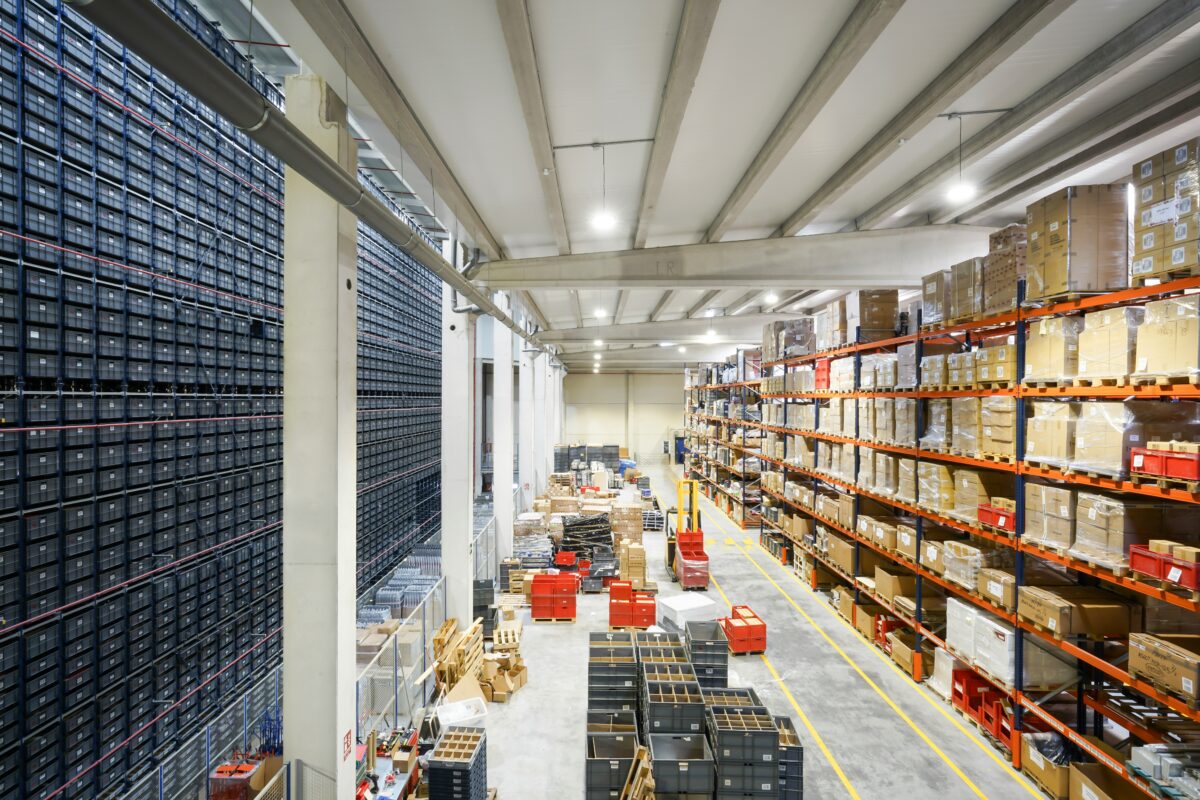
Logistics properties
Metabuild supports owners and operators of logistics properties with simulation-based analysis, AI and clear decision frameworks – enabling lower operating costs, structured retrofit planning and long-term competitive assets.

Challenge: Energy-intensive assets under growing ESG pressure
Logistics properties are among the most energy-intensive asset classes. Large volumes, high air change rates, extensive ventilation and cooling systems, 24/7 lighting and vast heated areas continuously drive operating costs upward. At the same time, EU taxonomy requirements, CRREM pathways and net-zero targets are increasing pressure on owners and investors.
In logistics, even small planning or retrofit missteps can have outsized effects on energy demand, operating costs and long-term financeability.
The market has decided: Net zero is becoming the leasing standard
Pressure is no longer coming from regulation alone – it is coming directly from occupiers. Already 50% of Europe’s largest logistics occupiers are targeting net-zero emissions across their portfolios by 2030. A further 37% are already developing concrete net-zero transition plans. At the same time, sustainability factors such as energy supply and building performance have gained significant importance in location and leasing decisions (Source: CBRE European Logistics Occupier Survey 2025).
For owners and investors, this means one thing: ESG performance now directly determines lettability, cash flow and exit potential. Logistics assets that are not optimised today for net zero, energy efficiency and operating costs risk structural value erosion in the near future – simply because occupiers are already filtering accordingly.
Our approach: Simulation-driven decisions and cost advantages
Metabuild combines high-resolution simulations, AI and precise cost models to answer the questions that truly matter:
- How far can operating costs be reduced by switching energy sources?
- Do heat pumps or hybrid systems make economic sense for this asset?
- Which measures ensure ESG compliance and reduce stranding risk?
- How do building envelope, technical systems and energy supply affect lifecycle costs and CO₂ emissions?
The result: double-digit percentage cost advantages in both CAPEX and OPEX – and logistics buildings that remain economically robust and ESG-compliant.
PV as the largest untapped lever
Few asset classes offer roof areas as large as logistics – and few levers have such a direct impact on costs and ESG metrics. Metabuild quantifies energy yield, self-consumption, CO₂ effects and economic performance of PV systems on a project-specific basis. This makes it clear which investments truly pay off and how roof areas can be used strategically to reduce energy costs and mitigate stranding risks.
Forward-looking retrofit strategies
For logistics assets, success is not just about if you modernise, but when. Poorly timed retrofits can quickly destroy value at a multi-million scale. Metabuild develops AI-supported retrofit roadmaps tailored to logistics properties, accounting for remaining service lives of building envelope and technical systems. Investments are sequenced intelligently to maximise impact on costs, ESG performance and value preservation – without redundancy or misallocation of capital.
Attractiveness for occupiers and workforce
Logistics properties are no longer just transshipment hubs – they are workplaces. Indoor air quality, temperature stability and daylight directly influence absenteeism, productivity and employer attractiveness. Using high-resolution simulations, Metabuild shows which measures reduce operating costs while significantly improving indoor conditions – a decisive advantage for leasing and in a tightening labour market.
ESG transparency for investors and developers
Investors and lenders increasingly demand robust answers for logistics assets: What will CO₂ pricing cost over the next ten years? When does CRREM stranding become a risk? And what level of investment is required to stay on track? Metabuild provides these answers through scientifically sound simulations and highlights which design or system options offer the most secure and economically viable path forward. The result is a data foundation that not only reveals risks, but actively creates competitive advantage.
Scientifically robust, proven in practice
Our methodology builds on more than eight years of experience and has been developed and validated in multiple EU research projects. All variants are simulated using the internationally leading calculation engine EnergyPlus and combined with detailed quantity take-offs and cost calculations. For formal compliance, we work in accordance with local energy code requirements – delivering results that convince operators, investors and developers alike.
Discover how Metabuild supports logistics properties.

Retrofit roadmaps
Retrofit decisions impact millions. Metabuild pinpoints the right measures to cut costs and de-risk investments.









Retrofit roadmaps
Retrofit decisions impact millions. Metabuild pinpoints the right measures to cut costs and de-risk investments.
New building optimisation
Generic data leads to expensive new buildings. Metabuild uses real simulations to cut costs, de-risk decisions and reduce CO₂.
Start making confident decisions for logistics assets.
We provide the data needed to reduce operating costs, meet ESG targets and mitigate CRREM risks – with clear, investment-ready pathways.

„We always want the best solution for our customers and tenants. And Metabuild’s analyses are fundamental to this.“
Dr. Lis Hannemann-Strenger, CEO
Strenger Gruppe

„We have already optimised over 170,000 m² of GFA with Metabuild. The platform is an integral part of our processes.”
Robert Schöps, Head of Development
KauriCAB
Other asset classes in which Metabuild supports you

Office buildings
Office assets face rising costs, ESG pressure and higher occupier expectations. With the right data, competitiveness is manageable.